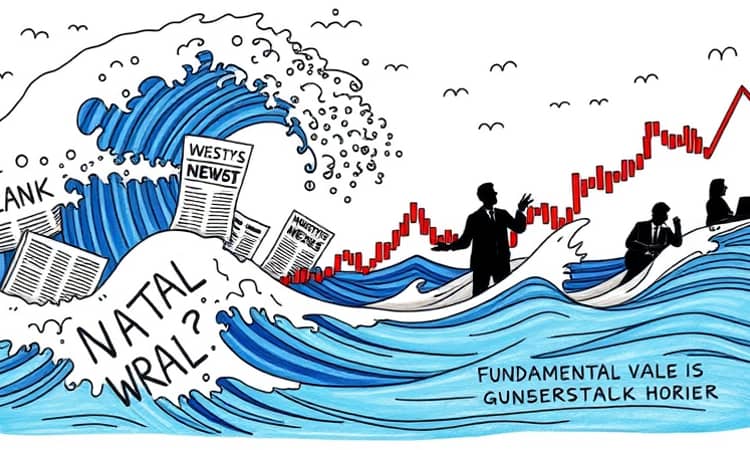
In today’s hyperconnected world, market movements often feel like an open book—until you realize the chapters are written by stories, not solely by data. Unpacking these tales can empower investors to navigate volatility and discover hidden opportunities.
Understanding Narrative Fallacy
The complex market events with simplistic stories phenomenon, known as the narrative fallacy, leads us to accept tidy explanations over messy facts. When markets surge or plunge, media and analysts often point to single causes—"inflation fears" or "growth optimism"—ignoring the myriad forces at work.
At its core, this fallacy thrives on our natural desire for coherent stories. We crave certainty, yet markets are driven by thousands of participants, each with unique expectations, positions, and reactions. Overlooking this complexity can blind us to real risks and opportunities.
- Headline-driven explanations oversimplify price dynamics, attributing moves to isolated events.
- Emotional drivers amplify rallies or sell-offs by downplaying or exaggerating risks.
- Narratives create deviations from fundamental value, causing significant ups and downs.
The Cycle of Market Narratives
Stories in markets don’t appear overnight; they follow a predictable lifecycle that mirrors human psychology. Recognizing each phase helps investors time entries and exits with greater confidence.
1. Emergence: A tentative story forms amid background noise. Early adopters take notice.
2. Momentum Builds: Experts and media amplify the tale, driving prices higher.
3. Peak: Enthusiasm reaches a fever pitch; valuations may seem stretched.
4. First Cracks: Contrarian data emerges, triggering pullbacks and shaking out weak hands.
5. Continued Climb: Renewed optimism extends the trend—often irrationally.
6. Further Cracks: Structural weaknesses appear, eroding confidence.
7. Collapse or Transition: The narrative either crumbles or evolves into a new story.
Consider the crude oil saga from 2020 to 2023: prices rocketed from $50 to $120, fueled by supply concerns and demand optimism, before shifting sentiment sent them back toward equilibrium.
Quantifying Market Narratives
Advanced investors now use data science to track and measure these powerful stories. By applying natural language processing to thousands of articles, researchers create narrative indicators that capture both attention intensity and sentiment.
One landmark study demonstrated that the "Market Crash" narrative alone explained more price variation in US equities than traditional macro predictors. Integrating these indicators into a portfolio delivered an information ratio of 1.26, outperforming standard benchmarks.
Beyond returns, understanding narrative exposure helps manage risk. For instance, during the COVID-19 panic, traders hedged stocks most sensitive to negative coverage, mitigating losses.
Historical Echoes: Lessons from Past Narratives
Stories have driven markets for centuries. From 17th-century Tulip Mania to the tech exuberance of Generative AI today, the pattern repeats. Recognizing these echoes offers practical wisdom.
- Generative AI fascination and fear alternately propel tech stocks upward and then spark profit-taking.
- Higher-for-longer rates narrative endured despite mixed data, sustaining bond yields at multi-decade highs.
- Immaculate disinflation hopes ignited rallies before stubborn inflation forced a painful retreat.
- Commodity supercycle stories drove resource stocks well beyond intrinsic demand trends.
- Market crash narratives have historically foreshadowed spikes in volatility.
Empower Your Investing with Narrative Awareness
How can you harness the power of market narratives without being swept away? Start by blending storytelling awareness with time-tested analysis. This dual approach fosters both agility and discipline.
- Monitor sentiment indicators alongside earnings and economic data to spot neutral data supports prevailing stories.
- Ride momentum exit at narrative peaks by tracking media coverage intensity and price divergences.
- Develop a narrative-conscious allocation that hedges extreme bearish stories, preserving capital during downturns.
- Use visual tools—charts annotated with narrative milestones—to visualizations heatmaps and narrative annotations.
- Regularly challenge the prevailing tale by seeking contrarian research and alternative forecasts.
By staying vigilant to the stories shaping sentiment, you can anticipate turning points before they fully unfold. Combine this insight with robust risk management to capture upside while protecting against downside shocks.
Conclusion: Crafting Your Own Narrative Edge
Markets will always spin stories—some grounded in reality, others purely speculative. Mastering this landscape means learning to read between the lines, question easy explanations, and build strategies that respect both data and narratives.
Whether you’re a seasoned portfolio manager or an individual investor, developing a narrative edge can unlock new perspectives and returns. Embrace the art and science of storytelling in finance, and you’ll find yourself better equipped to navigate the waves of market change.