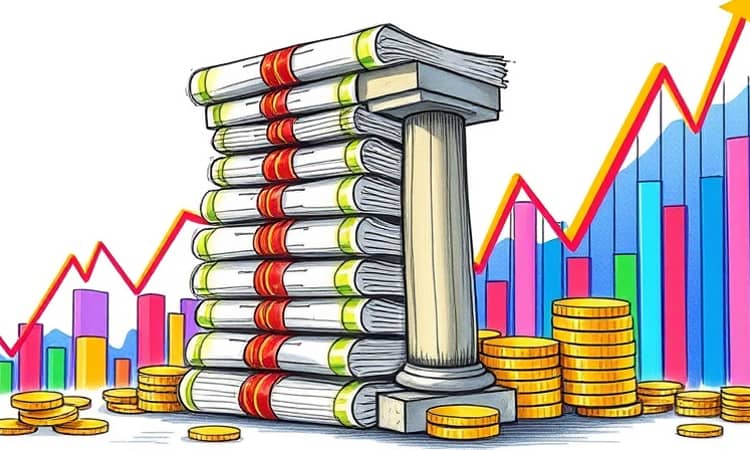
In a world of shifting market tides and economic uncertainties, bonds stand out as a reliable source of income and portfolio ballast. By offering lower volatility compared to stocks and serving as diversification from equities, high-quality bonds like Treasuries become essential tools for investors seeking steadiness and predictable returns.
Understanding the Foundation of Bonds
Bonds represent debt instruments issued by governments, corporations, and other entities to raise capital. Investors lend money to issuers in exchange for periodic interest payments and the return of principal at maturity. This structure creates steady streams of predictable returns and preserves capital when held to maturity, making bonds a cornerstone for conservative strategies.
Beyond their income component, bonds play a vital role in reducing overall portfolio risk. When equity markets falter, high-quality bonds often appreciate or hold value, offsetting losses in stocks. This risk-mitigation capability underpins bond appeal and positions them as ideal holdings during market stress.
Types of Bonds and Funds
Investors can choose from a variety of bond categories, each offering distinct risk-return profiles. Organizing these types by issuer and credit quality helps build balanced allocations that align with individual goals.
- Government Bonds: Issued or guaranteed by sovereign entities like U.S. Treasuries, Eurozone Bunds, or U.K. gilts. These instruments have the highest credit quality, low yields, and excel at preserving capital in turbulent times.
- Mortgage-Backed Bonds: Backed by pools of home loans, often sponsored by agencies such as Fannie Mae or Freddie Mac. They deliver higher yields than Treasuries while introducing prepayment and credit considerations.
- Corporate Bonds: Debt issued by companies. Investment-grade corporates feature moderate yields and credit quality from stable firms, whereas high-yield or “junk” bonds offer higher returns but carry elevated default risk.
- Municipal Bonds: Issued by states, cities, and local authorities. Interest is often tax-exempt at the federal level, making munis attractive for high-bracket investors seeking tax-efficient income streams.
- Multisector Funds: Pooled vehicles allocating across government, corporate, high-yield, and emerging markets. These funds simplify diversification and adjust allocations dynamically based on market conditions.
- International/Global Bonds: Sovereign and corporate debt from non-domestic issuers. They introduce currency and geopolitical considerations but can enhance diversification by reducing correlation with domestic equities.
- Other Instruments: Convertible bonds blend equity upside with fixed-income safety; emerging market sovereigns deliver high yields alongside heightened political and credit risks.
Roles and Benefits in Your Portfolio
Integrating bonds offers four core advantages: income generation, diversification, stability, and tactical flexibility. Each attribute enables investors to pursue objectives with greater confidence and resilience.
By holding bonds, one secures a predictable yield stream that can fund lifestyle expenses or reinvest for compounding growth. Income-focused investors often turn to bond funds or ETFs to access liquidity and professional management.
Diversification remains a powerful argument for bonds. High-quality government debt, especially U.S. Treasuries, historically exhibits minimal correlation with equities, cushioning portfolios when stock markets decline. Even moderate allocations to investment-grade corporates or municipals can reduce overall volatility without sacrificing meaningful returns.
Stability is paramount when market sentiment shifts unexpectedly. Bonds, by design, experience smaller price swings than stocks. In uncertain environments, capital preservation via fixed-income holdings becomes a strategic advantage.
- Low-Risk Fit: Government and investment-grade corporate bonds suit risk-averse investors prioritizing principal safety.
- Moderate-Risk Balance: Agency-backed mortgages and municipal bonds combine reasonable yields with credit support.
- High-Risk Pursuit: High-yield and emerging market debt attract those targeting higher returns and comfortable with credit volatility.
2026 Market Outlook and Projections
As investors look ahead, the bond landscape in 2026 presents generally solid but subdued returns compared to prior years. Key determinants include central bank actions, inflation trends, and global economic resilience.
Recent data suggest the U.S. Federal Reserve may enact one to two more rate cuts following three reductions in 2025. While this could push short- and intermediate-term Treasury yields lower, persistent deficits and international rates are likely to keep the 10-year near 4%.
Practical Strategies to Harness Bond Potential
To effectively deploy bonds in 2026, consider a tiered approach based on time horizon, income needs, and risk appetite. Rebalance regularly to capture opportunities and manage exposures as markets evolve.
Short-term investors might focus on money market and Treasury bills to lock in current yields with minimal duration risk. Medium-term horizons of three to five years align well with intermediate Treasuries and high-quality corporates, offering a balance between yield and price stability.
Longer-term allocations can lean into selected high-yield or emerging market debt when valuations appear attractive, while maintaining a core of investment-grade holdings to anchor the portfolio. Select funds or ETFs with a strong track record and transparent fee structures.
Monitor central bank communications and economic indicators to anticipate shifts in rate policy. If inflation shows signs of reacceleration, favor shorter-duration positions. Conversely, a clear path to lower inflation and growth deceleration may reward longer-duration bonds.
Finally, blend bonds with equities to create a dynamic allocation that responds to changing risk-return profiles. In times of equity strength, bonds preserve gains; during equity downturns, bonds can provide both income and price support.
By viewing bonds as essential building blocks rather than passive holdings, investors can construct resilient portfolios that weather volatility, generate reliable income, and participate in potential upside when markets rally. With strategic allocations and disciplined rebalancing, bonds will continue to serve as a stable addition to any investment strategy in 2026 and beyond.