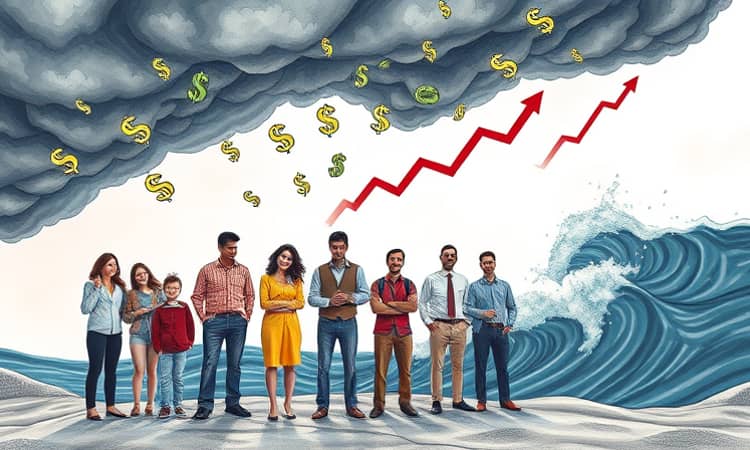
In an era marked by rapid change and uncertainty, financial resilience is no longer optional—it’s essential. Economic storms have transformed from isolated events into recurring challenges that test the fortitude of households, businesses, and entire communities. This article explores practical strategies, real-world case studies, and policy dimensions to help every reader build the capacity to withstand shocks and emerge stronger.
Why Financial Resilience Matters Now
Recent years have seen persistent volatility driven by persistent inflation and market volatility, polarized geopolitics, and climate-related catastrophes. These disruptions heighten the risk of income loss, unexpected expenses, and asset devaluations. Traditional planning models that rely on precise forecasts often fall short when confronted with multi-dimensional threats. Instead, experts now emphasize that preparation always beats prediction, urging individuals and organizations to focus on building buffers, diversifying exposures, and embedding flexibility.
For households and firms alike, resilience has shifted from a defensive posture to a core source of competitive advantage and value creation. Investors reward companies with strong stress-testing protocols. Regulators demand that banks and insurers hold ample capital. Consumers increasingly trust brands that demonstrate an ability to maintain services during crises. At every level, resilience is a strategic priority that safeguards not only survival, but long-term prosperity.
Understanding Economic Storms
Economic storms arise from interconnected sources that strike with little warning and compound one another. Recognizing their variety is the first step toward robust planning.
- Cyclical downturns and rising unemployment tighten credit, depress demand, and erode confidence.
- Inflation and cost-of-living pressures reduce real incomes and deplete savings buffers.
- Financial-market volatility and liquidity crunches threaten solvency for leveraged players.
- Climate-related disasters and natural hazards inflict direct damage and disrupt supply chains.
- Geopolitical and operational shocks such as cyberattacks, trade restrictions, and policy shifts add uncertainty.
Individual and Household Resilience
Personal financial resilience is the ability to absorb income shocks or expense spikes without enduring long-term hardship. Key pillars include:
- Emergency savings fund for resilience: Maintain liquid reserves covering three to six months of essential expenses in accessible accounts.
- Prudent debt levels and service ratios: Prioritize paying down high-interest, unsecured debts and avoid over-leveraging relative to stable income.
- Diversified income sources and investments: Explore side gigs or freelancing, while allocating assets across stocks, bonds, and real estate to balance growth and risk.
- Insurance coverage aligned with risks: Secure health, disability, property, and life insurance policies suited to one’s exposure and cost structures.
- Financial literacy and continuous planning: Regularly revisit budgets, update goals, and learn new skills to enhance earning potential.
Adhering to these elements transforms individuals from passive victims of economic turbulence into empowered navigators of uncertainty.
Small Business Financial Resilience
Small firms often operate with tight margins and limited access to capital, making resilience measures vital for continuity and growth.
- Smart budgeting and cost discipline: Analyze past expenditures, eliminate nonessential costs, renegotiate vendor contracts, and allocate buffers for unexpected crises.
- Maintaining cash buffers and credit lines: Secure contingent facilities and establish pre-approved emergency spending authorities to address sudden liquidity needs.
- Operational continuity planning: Conduct business impact analyses to identify critical services, set recovery time objectives, and define “minimum viable service” standards.
- Leveraging technology and PEO partnerships: Use professional employer organizations to streamline HR, payroll, and benefits, while integrating real-time data for informed decisions.
Corporate and Community Dimensions
At the enterprise level, resilience means maintaining stakeholder trust and essential functions under stress. At the community level, it involves policies and investments that protect collective well-being.
Public policy plays a crucial role by funding uninsured disaster losses, incentivizing resilient infrastructure, and ensuring inclusive recovery. Community organizations can bolster local networks, share resources, and disseminate data-driven decision making and insights that empower vulnerable populations.
Tools, Data and Case Studies
Digital platforms and open data have democratized resilience planning. Tools for budgeting, risk modeling, and scenario simulation are now accessible to individuals and businesses alike. For example, one regional nonprofit used open climate data to map flood exposure and guided 1,200 homeowners to affordable coverage, reducing potential losses by 40%.
In the corporate sphere, a manufacturing firm conducted quarterly stress tests against supply chain disruptions. By diversifying suppliers and investing in on-site backup capacity, it maintained 95% service levels during a major port shutdown. These case studies underline the power of adaptation through continuous learning and planning.
Conclusion: A Call to Action
Economic storms will continue to challenge us, but resilience is a skill that can be cultivated. Whether you’re saving your first emergency fund, tightening your small business budget, or steering a multinational balance sheet through uncertainty, the principles remain the same: build buffers, diversify exposures, test scenarios, and learn continuously.
By embracing resilience as a strategic advantage, we not only protect ourselves and our enterprises, but also contribute to public policy and community engagement that strengthens society as a whole. Start today—assess your vulnerabilities, craft your plans, and weather the next storm with confidence and purpose.