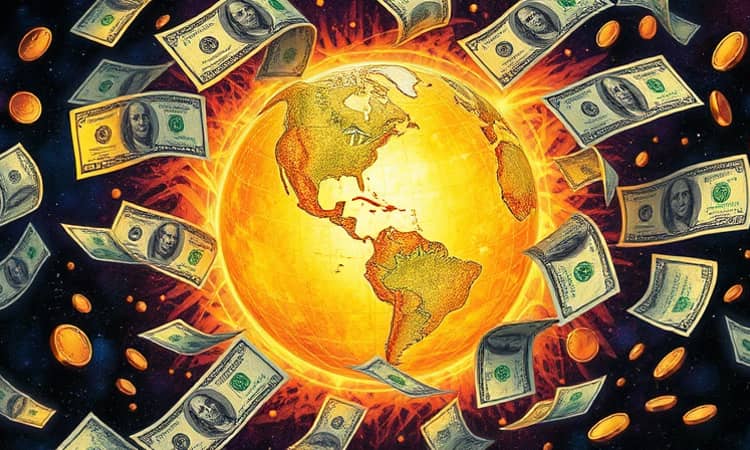
The United States dollar has influenced economies and daily lives around the world. This guide will help you grasp its core principles, history, and practical uses.
Understanding the USD: Foundation of a Global Currency
The U.S. dollar (USD), symbolized by "$" and designated with the code USD, serves as the official currency of the United States and its territories. Beyond national borders, it is recognized as a global reserve currency for decades, playing a central role in international trade and finance.
More than a medium of exchange, the dollar underpins pricing of commodities such as oil and gold, and is often held by other nations to stabilize their own economies. Its stability and liquidity make it a default choice for cross-border transactions, remittances, and foreign reserves.
Physical Forms: Bills and Coins Explained
The dollar exists in two primary physical forms: banknotes and coins. Each denomination has unique features and values, aiding everyday transactions and teaching fundamental conversion skills.
- Bills: $1, $2, $5, $10, $20, $50, $100 (higher denominations discontinued in 1969)
- Coins: 1¢ (penny), 5¢ (nickel), 10¢ (dime), 25¢ (quarter), 50¢ (half dollar), $1 coin
Understanding conversions is crucial: 100 pennies equal $1, four quarters make $1, and ten dimes equal $1. These simple relationships form the backbone of budgeting basics and saving strategies for beginners.
Historical Evolution: From Coinage Act to Fiat Currency
The dollar’s journey began with the 1792 Coinage Act, which established the U.S. Mint and pegged the currency to gold and silver. Over time, global events and policy shifts transformed its foundations.
This transition to a fiat currency without commodity backing means the dollar’s value now floats on market supply and demand rather than a physical asset. Understanding this shift is key to grasping modern monetary policy.
Institutional Guardians: How the USD is Managed
A network of institutions ensures the dollar’s integrity, circulation, and policy direction. Each plays a distinct role in maintaining stability and trust.
- U.S. Federal Reserve: Conducts monetary policy through the FOMC, meets eight times yearly, and executes open-market operations.
- U.S. Mint: Produces circulating coins, commemorative issues, and collectible pieces.
- Bureau of Engraving and Printing: Prints Federal Reserve notes with advanced security features.
Daily operations by these institutions adjust money supply, influence interest rates, and safeguard the currency’s reliability.
Value Dynamics: Inflation, Exchange Rates, and Beyond
The dollar’s purchasing power shrinks as inflation rises. Domestic inflation is tracked by price indices; when prices climb, each dollar buys less. Internationally, exchange rates determine how many foreign currency units one dollar fetches.
The U.S. Dollar Index measures value against a basket of major currencies. It spiked in mid-2022 amid global uncertainty and eased in 2025 due to shifting trade policies and tariff debates. A strong dollar makes imports cheaper for Americans but can reduce export competitiveness abroad, while a weak dollar has the opposite effects.
Security Features: Spotting Genuine Currency
Counterfeiting risks drive continual redesigns and security upgrades. Knowing these features protects you and your community.
Key safeguards include:
- Distinct paper with red and blue fibers embedded throughout each note.
- Color-shifting ink and a 3-D security ribbon on higher denominations.
- Security threads and watermarks visible when held to light.
- Microprinting of text such as "THE UNITED STATES OF AMERICA" around portraits.
- Unique serial and plate numbers indicating issuing Federal Reserve districts.
Practical Financial Literacy: Using the Dollar in Everyday Life
Mastering the dollar empowers you to manage personal finances effectively. Start with simple steps:
- Track expenses by recording purchases in cents and dollars.
- Set aside emergency savings equivalent to three months of living costs.
- Use apps or services for secure international remittances.
- Monitor inflation trends to adjust savings and investment goals.
By practicing these habits, you build confidence in handling money and protecting your purchasing power over time.
Conclusion: Empowerment Through Knowledge
From its origins in 1792 to its role as the world’s dominant currency, the U.S. dollar has evolved into a complex instrument of global finance. Yet at its core, it remains a simple idea: a trusted medium of exchange backed by institutions and informed citizens.
Arming yourself with a clear understanding of denominations, history, mechanics, and security features transforms everyday transactions into opportunities for greater financial stability. Embrace this knowledge and take control of your financial future—one dollar at a time.