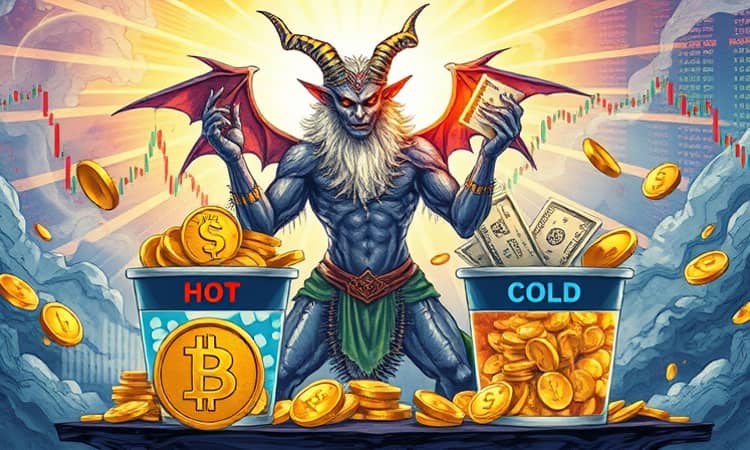
Investing can feel like battling unseen forces that sort winners from losers. In this exploration, we illuminate those hidden influencers—and how to tame them.
The Maxwell’s Demon of Investing
The classic thought experiment of Maxwell’s Demon imagines a tiny gatekeeper sorting gas molecules by speed to generate useful work. In finance, an investing demon attempts a similar feat: it separates assets into “hot” (high expected return) and “cold” (low expected return) bins using factors ranging from macroeconomic indicators to calendar anomalies.
But do these sorting strategies truly deliver consistent outperformance? And how wide is the potential return gap between the selected bins? Understanding the nature of these demons is the first step toward discernment.
Common Sorting Strategies and Their Demons
Investing demons rely on various predictors, often in combination. Each method claims to uncover latent return differentials that can beat the market.
- Asset class allocation: Rotating between equities, bonds, commodities, or cash based on relative valuations and yields.
- Macro conditions: Using unemployment rates, GDP growth, or interest rate trends to forecast sector performance.
- Company financials: Screening stocks by metrics like price-to-book, earnings yield, or return on equity.
- Technical indicators: Relying on moving averages, momentum signals, or volatility breakouts to time trades.
- Sentiment measures: Gauging investor positioning through futures flows, options skew, or corporate buyback announcements.
- Calendar effects: Exploiting seasonal patterns such as the January effect or day-of-week anomalies.
- Political signals: Tracking election cycles or policy shifts to adjust country or sector bets.
Each sorting strategy promises an edge, yet history teaches caution. The market rapidly adapts, and anomalies that once seemed robust often fade once widely exploited.
Biases and Pitfalls That Bury Performance
Behind every alluring demon lurk biases that can turn theoretical gains into real losses. Chief among these are data and researcher pitfalls:
- Survivorship bias: Ignoring failed companies or delisted securities, thus inflating backtested returns.
- Confirmation bias: Cherry-picking evidence that supports a favored thesis while dismissing contradictory results.
- Data snooping bias: Testing hundreds of parameters until a promising signal emerges by chance.
- Second-hand snooping: Blindly adopting a guru’s indicator without understanding its testing history.
- Subset selection: Reporting performance over convenient timeframes or market conditions rather than full cycles.
Even if a factor showed significant outperformance historically, the real world introduces additional friction. Trading costs and slippage can erode gross returns, and operational expenses further chip away at net profits.
Market Fears and the 2026 Outlook
In early 2026, many investors face a paradox: extreme complacency amid abundant risks. The VIX, often called the “fear gauge,” closed at 14—its lowest point relative to annual extremes since inception in 1990. Meanwhile, Bank of America’s bull-bear indicator has spiked to 8.5, triggering historical signals to sell.
Strategists tracked by MarketWatch forecast a 10% gain for the S&P 500 in 2026, while U.S. GDP growth is expected to slow to around 1.2% after a strong summer in 2025. Yet overlooked threats include a potential resurgence in inflation, choppy Fed policy, and AI-related market splintering as the Magnificent Seven face growing competition.
These metrics illustrate the tug-of-war between complacency and latent risk. Investors who follow every new sorting strategy may find their returns dashed by shifting conditions and hidden costs.
Costs, Frictions, and the Vanishing Edge
Even a demon that flawlessly identifies hot assets faces practical hurdles. Data fees and specialized software inflate research expenses. Frequent trading incurs brokerage commissions and market impact. Delegated strategies add management and compliance costs. Finally, capital mismatches can leave excess cash idle when few hot opportunities exist.
Studies reveal that within two years of anomaly publication, only about two-thirds of the published gross outperformance remains. After subtracting all frictions, many factor-based strategies barely outpace passive benchmarks, if at all.
Summoning Your Inner Daemon
While investing demons dissect markets mechanically, each of us carries a personal daemon: an unconscious guide that shapes intuitions, creativity, and purpose. From mythology to modern psychology, this internal force can help us confront market fears with clarity.
In literature, daemons appear as soul-animals or spirit guides—fragile yet powerful companions. Freud described a process of “half-taming” unconscious complexes through self-reflection, akin to forging a conscious partnership with our inner voices.
- Recognize intuitive insights: Pause to note sudden convictions that lack obvious data support.
- Question emotional shortcuts: When fear or euphoria grips you, ask what deeper belief is driving action.
- Practice mindful detachment: Observe market noise without immediate reaction, preserving rational judgment.
- Align with long-term purpose: Anchor decisions in your overarching goals rather than fleeting trends.
By nurturing this inner guide, investors can resist chasing fleeting anomalies and instead build resilience through disciplined, purposeful choices.
Conclusion: Embrace Rational, Fearless Investing
Investing demons promise market-beating myths, but biases, costs, and adaptive markets often dissolve the edge. A wiser approach blends empirical discipline with introspective awareness—taming both external sorting strategies and internal impulses.
Passive indexing remains the most reliable method to capture broad market returns with minimal friction. Yet even passive investors benefit from acknowledging their personal daemons, using them to interpret market signals without succumbing to fear or greed.
Demystifying demons—both mechanical and psychological—empowers you to invest with confidence, resilience, and clarity. In a world of shifting narratives and hidden costs, the greatest victory lies in mastering both the market’s illusions and your own inner guides.