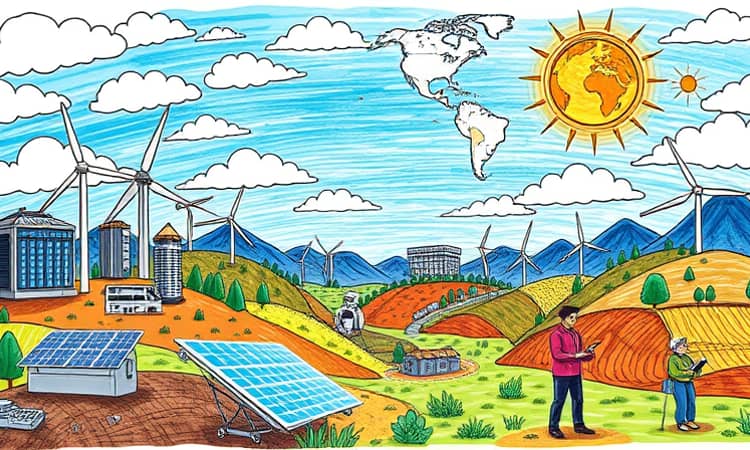
As we stand at the crossroads of rapid change, a series of enduring forces are reshaping economies, industries, and societal norms. From energy revolutions to demographic shifts, these megatrends offer both challenges and unparalleled opportunities for investors seeking to build wealth responsibly.
Economic Security and Reshoring
In an era defined by tariff volatility and geopolitical tensions, nations and corporations are prioritizing resilient supply chains and domestic manufacturing. The COVID-19 pandemic and rising trade frictions exposed vulnerabilities in global trade networks, prompting an urgent drive toward reshoring critical industries.
China, for instance, produces nearly 60% of the world’s rare earth metals, while Taiwan accounts for 90% of advanced semiconductor manufacturing. These concentrations underscore critical minerals and resources dependencies that can disrupt production and national security. Meanwhile, the United States has surged its annual investment in new manufacturing facilities to $225 billion in 2024, aiming to triple advanced semiconductor output in the coming decade.
Energy Transition and Demand Surge
The digital economy’s relentless growth—fueled by data-hungry AI applications—has increased global power demand. Data centers already consume 3% of U.S. electricity, projected to rise to 8% by 2030. Simultaneously, decarbonization goals drive investment in renewables, nuclear, and grid modernization.
Investors are focusing on mature segments like renewable energy, smart grids, and storage. Solar and wind installations, combined with energy storage solutions, form the backbone of a low-carbon future. Nuclear power is experiencing a renaissance through both refurbishment of existing plants and new small modular reactor projects.
- Renewables: labor-intensive growth creating jobs and innovation
- Grids & storage: essential for managing intermittency
- Nuclear & offshore oil: balancing baseload reliability
AI and Technological Disruption
Artificial intelligence is transitioning from a niche curiosity to a transformative economic catalyst. McKinsey estimates generative AI alone could add trillions to the global economy by optimizing processes, automating tasks, and unlocking new products.
Agentic AI and cognitive infrastructure herald a new era where software agents autonomously execute complex workflows, while human creativity merges with machine precision. Industries from finance to healthcare are integrating AI in decision-making, drug discovery, and personalized services.
Investment themes include AI hardware (advanced semiconductors, specialized chips), data center expansion, and applied AI platforms. Ethical AI governance and cybersecurity also present growth avenues as organizations balance innovation with trust.
Demographics and Healthcare Innovation
By 2030, one in six people globally will be aged 60 or older, driving a surge in healthcare spending that already exceeds $10 trillion annually. Longevity research, robotics-assisted surgery, and AI-driven diagnostics are poised to revolutionize patient care.
Obesity treatments, for example, have demonstrated a 73% reduction in diabetes risk and a 20% decline in cardiovascular mortality. Such breakthroughs fuel demand for advanced pharmaceuticals, remote monitoring devices, and telehealth solutions.
- Medical robotics: precision surgery with lower recovery times
- AI diagnostics: faster, more accurate disease detection
- Longevity services: wellness programs for aging populations
Sustainability, Circular Economy, and Climate Adaptation
Resource depletion and climate volatility intensify the push toward a circular economy where waste is minimized and materials are perpetually reused. Water stress affects one-third of thermal power plants and two-thirds of new data centers, underscoring the need for efficient water management.
Waste-to-biomethane and fertilizer projects convert organic waste into valuable byproducts, while advanced recycling technologies reclaim metals and plastics. Climate adaptation efforts—such as coastal defenses, resilient infrastructure, and disaster response systems—represent another critical investment frontier.
Geopolitics and a Fracturing World
Global power dynamics are shifting, with new alliances and trade blocs emerging. Tariff unpredictability and national security concerns bolster domestic production and defense spending.
Investors must navigate this complex landscape by focusing on companies that provide solutions for supply chain resilience, cybersecurity, and critical infrastructure. Active management can unearth hidden gems addressing these strategic pain points.
Infrastructure and Other Opportunities
Underlying all megatrends is a pressing need for robust infrastructure. From high-voltage transmission lines and smart grids to digital networks and data centers, bridging the infrastructure gap offers both societal benefits and attractive returns.
Private capital is increasingly filling the void in middle-market value-add projects—optimizing utilities, enhancing renewable integration, and deploying distributed energy solutions. Investors can also explore liquidity and collateral transformation in emerging financial ecosystems.
Key Statistics at a Glance
Investment Strategies for 2026 and Beyond
To harness these multi-decade forces, investors should adopt a holistic, thematic approach:
- Prioritize accelerating themes over cyclical sectors.
- Seek companies solving critical supply chain and energy challenges.
- Diversify across assets: equities, private infra, credit, and real assets.
Active managers capable of identifying value-chain innovators will be best positioned to capture growth in AI, sustainability, and healthcare megatrends. Integrating environmental, social, and governance criteria ensures investments drive positive impact alongside financial returns.
Ultimately, these global megatrends are not isolated phenomena but interconnected forces that will define the economic landscape for decades. By aligning portfolios with these transformative dynamics, investors can build resilient wealth while contributing to a more secure, equitable, and sustainable future.
Embrace innovation, foster resilience, and invest with purpose—the world of tomorrow awaits those who prepare today.