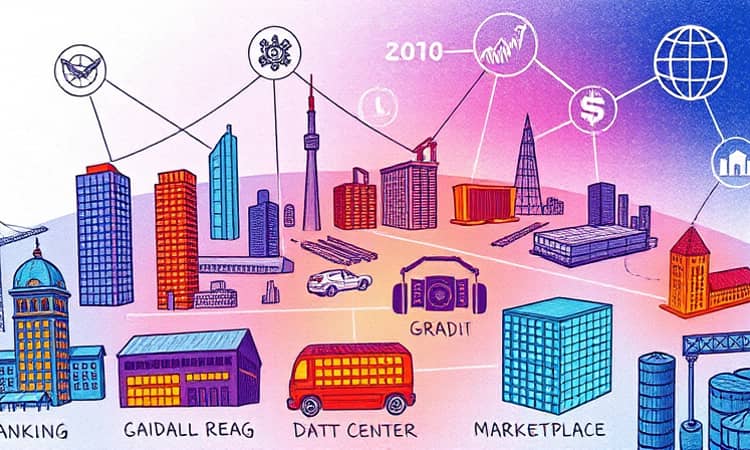
In today’s complex economic landscape, understanding how credit risk varies by sector is essential. This analysis explores key drivers shaping sector-specific vulnerabilities in 2026 and offers practical guidance on navigating them.
Macro Backdrop for Sector Credit Risk (2025–2026)
The global economy has entered a late-cycle environment with elevated valuations, where credit markets display typical end-of-cycle features: still-accommodative financial conditions, rising merger activity, and growing capital expenditures.
Growth is expected to remain subdued but broadly stable, with default rates forecast to decline in 2026 absent any significant shock. Yet a modest economic disturbance could quickly reverse this trend.
We also see a widening “K-shaped economy,” where certain consumers rely on credit to cover everyday expenses, creating a pool of borrowers with thin or limited credit histories. This phenomenon highlights the need for robust portfolio monitoring and early warning systems.
Tariff fluctuations and geopolitical fractures are unevenly stressing small businesses and trade-exposed industries, deepening sector disparities.
- Geopolitical fractures and funding stress
- Inflation re-acceleration and yield volatility
- AI-related equity correction in tech segments
- Private credit stress with contagion to banks and insurers
- Sovereign yield spikes from fiscal pressures
Regulatory & Structural Pressures Shaping Sector Credit Risk
Regulators have intensified scrutiny of internal credit models, particularly for portfolios with low default histories. Banks, insurers, and nonbank financial institutions (NBFIs) face deeper reviews of model assumptions, governance, and representativeness.
Under Basel IV, banks must reconcile economic risk views and regulatory capital outcomes, often benchmarking conservatism against peers to maintain competitiveness.
Model risk has emerged as a top priority. Static assumptions in credit loss forecasting, liquidity planning, and enterprise risk management are flagged as dangerous in a volatile environment. Vendor models—spanning AI underwriting, fraud detection, and asset-liability management—require mature governance frameworks.
- Intrusive reviews of IRB models and low-default portfolios
- Emphasis on statistical robustness and governance
- Liquidity and capital planning under stress scenarios
- Heightened oversight of third-party vendor models
Cross-Cutting Credit Risk Themes by Sector
Certain risks cut across all sectors, yet manifest differently by industry. Recognizing these themes is vital for tailored risk management.
- Rising delinquencies, especially among subprime consumers
- Tariff-driven input cost inflation in manufacturing and construction
- Selective lender behavior in commercial real estate
- Rapid expansion and tail risks in private credit and NBFIs
- Sovereign debt vulnerabilities in emerging markets
- Potential AI-driven corrections in technology and data center sectors
Banking & Financial Institutions
Developed-market banks benefit from strong capital buffers and rigorous stress testing, yet late-cycle risks persist. While nonperforming loans have improved marginally, high interest rates, inflationary pressures, and rapid private credit growth introduce new challenges.
A key paradox emerges: banks may appear individually resilient, but systemic risk can accumulate through their growing exposures to NBFIs. US banks’ loans to nonbank finance firms amount to approximately 10% of total bank lending, exceeding $1.1 trillion—up from 6% in 2021. In the EU, NBFI exposures account for 9.2% of consolidated bank assets.
These loans are typically non-recourse and secured by diversified portfolios with conservative loan-to-value ratios, yet their sheer scale creates potential transmission channels for stress.
Non-Bank Financial Institutions & Private Credit
Private credit has grown at an annual rate of 15–23% since 2010, filling the void left by banks post-Global Financial Crisis. For now, stable rates and solid asset performance support a neutral outlook for 2026. However, rapid expansion, uncertain asset quality, and limited central bank backstops heighten tail-risk concerns.
Liquidity remains a principal vulnerability: private lenders cannot directly access central bank facilities, so market-wide funding strains could amplify liquidity pressures and widen spreads.
Capital-intensive, low-default portfolios—such as large corporate facilities and project finance—pose additional challenges. Their sparse loss histories complicate model validation and capital calibration.
Commercial Real Estate (CRE) & Construction
CRE is a focal point of credit risk in a stagflationary or high-rate environment. Lenders have grown more selective, scrutinizing legacy fixed-rate loans made at low yields and raising questions about refinancing risk.
In tech hubs, commercial properties tied to high-growth valuations—offices and data centers—face a unique risk: an AI-driven equity correction could trigger abrupt repricing, undermining property cash flows.
Construction firms confront margin compression from rising input prices due to tariffs and global supply-chain disruptions. While project delays and cost overruns may not yet appear on balance sheets, lenders should prepare for worsening credit metrics in late 2025 and 2026.
Corporates by Rating & Leverage
High-yield issuers and leveraged loan borrowers stand out as particularly vulnerable. Tight credit spreads in investment-grade markets can reverse sharply, pushing up funding costs for lower-rated firms.
Investment-grade corporates enjoy relatively ample liquidity and stronger balance sheets, but elevated asset valuations and thin spread cushions leave room for abrupt repricing, which can ripple through supply chains and service-sector borrowers.
In contrast, private-market debt—where covenant levels may be lighter—could see sharper credit deterioration if market sentiment shifts or refinancing windows close.
Strategies for Sector-Specific Risk Management
Effective credit risk management in this late-cycle context demands a multifaceted approach:
- Implement dynamic portfolio monitoring with early warning indicators tailored to each sector’s stress drivers.
- Enhance model governance, ensuring assumptions remain valid under stressed scenarios.
- Stress test exposures to macro shocks—rate spikes, tariff swings, AI equity corrections—at the sector level.
- Collaborate across credit, risk, and regulatory teams to align economic views with capital planning.
Conclusion: Embracing Sector Nuance
As we navigate a late-cycle economy marked by geopolitical fractures, elevated valuations, and technological disruption, a one-size-fits-all credit approach is insufficient. Institutions that integrate sector-specific insights—from rising consumer delinquencies to tech-hub CRE risks—will be best positioned to anticipate stress and protect their portfolios.
By combining macro vigilance, robust model governance, and targeted monitoring, risk managers can turn complexity into a strategic advantage, preserving stability and seizing opportunities even in uncertain times.