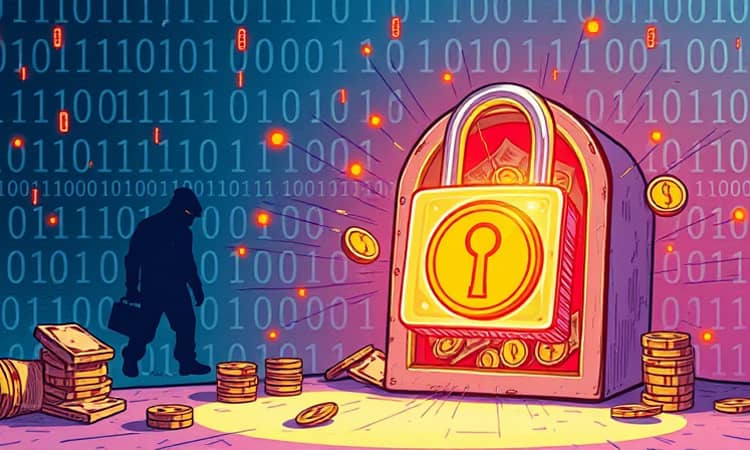
In today’s hyperconnected world, your financial life exists largely online. Every transaction, from payroll deposits to online shopping, depends on secure digital channels. Yet the financial sector remains a prime target for cybercriminals. With nearly one in five global cyberattacks aimed at banks, investment firms, and payment platforms, it is crucial to understand the threats and adopt strategies that safeguard your hard-earned money.
Beyond monetary loss, these breaches often expose customers’ personally identifiable information to attackers, including emails, phone numbers, and home addresses. Human error accounts for nearly a quarter of all incidents, highlighting the importance of ongoing vigilance. Whether you manage personal finances or oversee a small firm’s balance sheet, understanding these risks empowers you to take decisive protective action.
Third-party partners and supply chains introduce additional vulnerabilities. In 2025, external vendors were involved in 30% of breaches, a twofold increase from the prior year. As banks and financial platforms integrate complex networks of APIs and cloud services, safeguarding every link in the chain has become nonnegotiable. Stakeholders must demand rigorous security assessments and insist on transparent reporting from providers to fortify their defenses.
Understanding the Financial Cybersecurity Landscape
The financial industry sees hundreds of millions of dollars at risk in every attack. An average data breach now costs over $6 million, a figure expected to rise above $6.08 million by 2026. Recent years have witnessed a surge in incidents: 744 breaches in 2023 across the U.S. financial services, compared to just 138 in 2020. These numbers underline the escalating danger and the need for proactive measures.
Approximately three-quarters of attacks in finance and insurance target customer personal details. Detection and escalation costs rose to $1.63 million in 2024, despite slight improvements in 2025. With breaches costing an average of $8.19 million in 2023, every individual and organization must ask: are we doing enough to protect our data?
Recognizing and Avoiding Phishing Scams
Modern phishing campaigns often exploit global events and breaking news to craft convincing lures. During tax season or earnings reports, attackers send fraudulent notices claiming to require urgent documentation. Recognizing this pattern can help you stay one step ahead of malicious actors.
These rapidly evolving phishing tactics that adapt to consumer anxieties can fool even savvy users. By learning to spot common red flags, you can dramatically reduce your risk and avoid falling victim to fraudulent schemes.
- Unexpected requests for personal or account details
- Mismatched email addresses or suspicious URLs
- Urgent language pressuring immediate action
- Generic greetings instead of your name
- Attachments or links to unverified sources
Implementing Robust Authentication Measures
Strong, unique passwords are essential, but they represent only one layer of defense. Integrating modern identity verification and analytics can detect anomalies like unusual login locations or device changes. Biometrics, hardware tokens, and one-time codes foster a multi-layered approach that deters unauthorized access. Investing in password managers and regular credential audits can also minimize the risk posed by reused or weak passwords.
Enabling multi-factor authentication adds a critical barrier between your accounts and bad actors. Whether through text messages, authenticator apps, or biometric scans, this extra step ensures that stolen credentials alone are not enough to breach your defenses.
Financial institutions now prioritize multi-factor authentication protects accounts at the board level, with 57% of leaders ranking improved cyber governance as their top objective. You can adopt similar practices in personal and small business settings, maintaining tight control over every access point.
Preparing for Ransomware and DDoS Threats
Ransomware attacks have skyrocketed, with 64% of financial institutions experiencing an incident in 2024. Recovering from such attacks costs an average of $2.58 million, not counting the operational downtime and reputational damage.
Meanwhile, DDoS assaults can cripple online banking portals for hours or days, leading to reputational harm and lost business. Building a robust incident response plan, complete with offline backups and failover sites, ensures that you can restore operations with minimal disruption.
Securing Small Business Financial Operations
For small and medium enterprises, a single breach can be devastating: nearly 60% close within six months of an attack. Unlike large institutions, smaller businesses may lack dedicated security teams, making layered defenses and clear policies vital. Establishing routine reviews of network logs and access privileges will reduce surprise vulnerabilities and provide a stronger security posture.
- Maintain up-to-date backups in secure locations
- Conduct regular employee training on cyber hygiene
- Vet third-party vendors and supply chain partners
- Implement strict access controls and network segmentation
Leveraging AI Safely in Your Financial Defense
Artificial intelligence presents a double-edged sword: while it empowers attackers to launch more convincing phishing and social engineering schemes, it also enables defenders to monitor anomalies at scale. Financial institutions are adopting AI-driven fraud detection, combining transaction analytics with behavioral profiling. However, ongoing calibration and human oversight remain critical. Too much reliance on automated systems can create blind spots that savvy adversaries exploit.
Organizations that integrate AI-driven defenses require continuous tuning will outpace threat actors who leverage machine learning for targeted campaigns. By balancing automation with expert review, you can harness AI’s strengths without sacrificing critical oversight.
Empowering Yourself and Your Community
Ultimately, cybersecurity is a shared responsibility. By staying informed, you can drive awareness and proactive defense within your family, workplace, and broader community. Encourage peers to adopt security best practices, share real-world incident examples, and collectively demand stronger safeguards from financial service providers.
Protecting your pennies demands vigilance, preparation, and community engagement. Embrace these strategies today and build a resilient financial foundation that withstands the evolving threat landscape. Your future self, and those around you, will thank you for making cybersecurity a top priority.