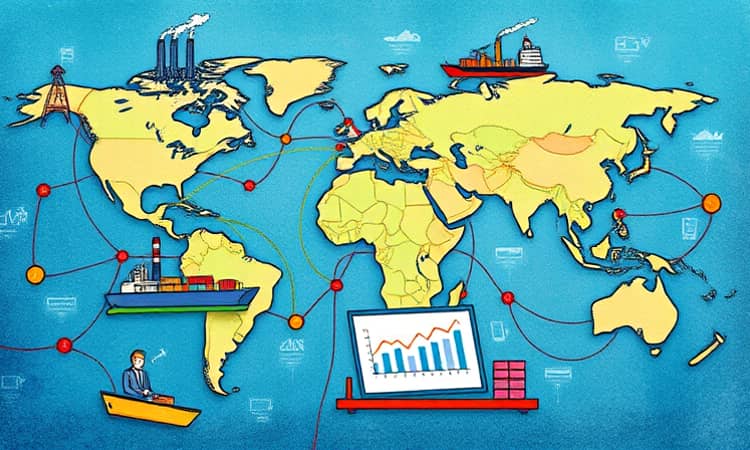
In an era of unprecedented connectivity, the hidden fragilities of global supply chains have emerged as a critical frontier for credit analysts. From geopolitical skirmishes to sudden tariff announcements, disruptions ripple through networks and can trigger unseen financial stress. Recognizing this, banks and credit institutions must embrace a fresh perspective, one that transcends traditional balance-sheet review and incorporates the pulse of supplier ecosystems.
This article delves into how integrating supply chain insights can strengthen lending decisions, reduce default risk and foster resilience. We explore empirical evidence from recent elections and tariff shocks, outline robust measurement frameworks and share practical strategies. By navigating this new terrain, analysts will harness operational fragilities as early warnings and build portfolios that weather tomorrow’s storms.
The Rising Importance of Supply Chain Risk in Credit Analysis
Credit assessment has long relied on financial ratios, collateral values and historical cash flows. Yet in a world of tightly woven supplier relationships, these metrics only tell part of the story. When a critical supplier falters or trade policy shifts overnight, a borrower’s operations and debt servicing capacity can be severely compromised.
Financial institutions that fail to account for these dynamics may face unexpected loan drawdowns, rising spreads and heightened default rates. By adding a novel bank exposure metric—one that captures sector-level supply chain co-movements—analysts gain a multidimensional view of borrower risk. Armed with this knowledge, lenders can anticipate credit demand surges during inventory front-loading or tightening during sourcing paralysis.
Empirical Evidence: Lessons from Recent Events
The November 2024 U.S. presidential election triggered a wave of trade policy uncertainty. Banks heavily exposed to high-risk supply chain sectors saw commercial and industrial (C&I) loan commitments decline sharply in late 2024, while their low-exposure peers held steady. However, when tariff announcements arrived in April 2025, those same high-exposure institutions experienced a dramatic rebound in loan utilization and wider spreads as borrowers rushed to secure inventory.
Weekly balance sheet data confirmed this pattern: initial credit tightening gave way to steep utilization increases in 2025:Q2, reflecting the real-world impact of supplier price negotiations and front-loaded imports. These shifts underscore the need for dynamic credit models that blend traditional financial analysis with real-time supply chain signals.
Measuring and Monitoring Supply Chain Exposure
To quantify supply chain risk, analysts have developed a firm-level metric based on stock return co-movements with a long-short disruption portfolio. Controlling for conventional predictors, this approach isolates pure supply chain shocks and aggregates exposures to sector levels using C&I loan shares. The result is a forward-looking indicator that anticipates credit demand shifts before they appear on the balance sheet.
Beyond financial co-movements, holistic assessments combine operational, geopolitical and reputational factors. Advanced AI platforms now enable real-time monitoring platforms that ingest shipment data, tariff announcements and supplier credit scores. When anomalies emerge—such as a sudden vendor payment delay—analysts receive alerts to re-evaluate borrower risk.
Risk Transmission and Contagion Mechanisms
Disruptions propagate through interconnected suppliers and customers. A factory shutdown can force borrowers to build costly inventories or pause production, eroding margins and cash flow. Credit contagion models, like Cox-Copula frameworks, capture these upstream and downstream dependencies, revealing how shocks synchronize across industries.
Macro factors—such as inflation and geopolitical tensions—amplify these dynamics. At the micro level, trust, collaboration and supply chain visibility can dampen contagion. Small and medium enterprises (SMEs) face heightened tail risks due to limited collateral and higher fixed costs. Recognizing these nuances empowers lenders to tailor terms and covenants according to each borrower’s network position.
Top Supply Chain Risks to Watch in 2026
- Tariff and trade tensions prompting sourcing paralysis and reconfigurations
- Inflationary pressures on material costs and labor shortages
- EU Carbon Border Adjustment Mechanism enforcement
- Rising cyberattack threats targeting vendor infrastructures
- Rapid shifts in commodity availability due to weather and geopolitical events
Practical Strategies for Credit Analysts and Financial Institutions
To capitalize on these insights and bolster portfolio resilience, practitioners should:
- Integrate supply chain scores alongside traditional credit reports
- Conduct deep due diligence on critical suppliers, evaluating SLAs and contingency plans
- Leverage operational resilience strategies in loan covenants, tying terms to supply chain health metrics
- Adopt AI platforms that merge shipment, payment and market data for continuous risk monitoring
- Engage in cross-functional collaboration between credit, procurement and risk teams
Leading firms are already pioneering these approaches. For example, a major beverage company integrates supplier credit data into procurement decisions, while an automotive manufacturer uses real-time monitoring to adjust credit lines as logistics conditions evolve. Such practices ensure that lending remains adaptive and grounded in the realities of global trade.
By embracing supply chain vulnerabilities as a new angle for credit analysis, banks and lenders gain a powerful edge. Early detection of upstream shocks, combined with agile risk management and resilient loan structures, transforms uncertainty into opportunity. In a world where disruptions are inevitable, those who anticipate, rather than react, will secure stronger portfolios and foster lasting borrower partnerships.