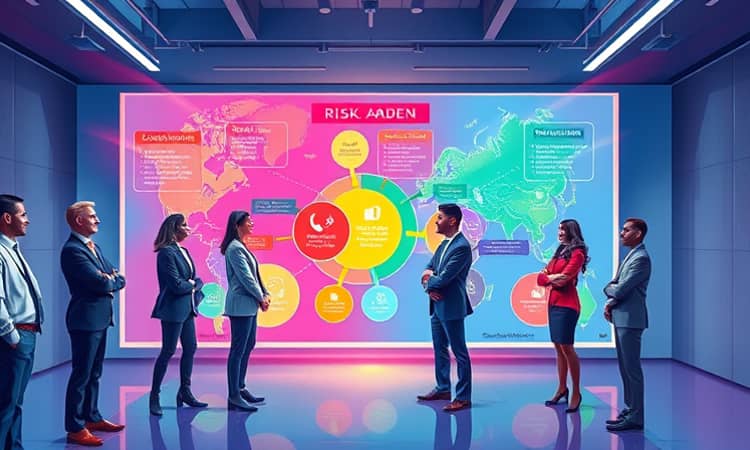
In today’s complex business landscape, uncertainty lurks around every corner—market disruptions, technological upheavals, regulatory shifts, and global crises all vie for leadership attention.
Yet it is in this very unpredictability that leaders find their greatest opportunity: to shape resilience, foster innovation, and guide their organizations toward sustainable growth. Leadership’s role in risk is not a side task; it is a non-delegable responsibility to own risk and to embed sound practices at every level.
Core Concepts of Risk Management and Leadership
Risk management is a systematic process of identifying, assessing, and mitigating threats or uncertainties that could derail strategic objectives. It blends quantitative analysis with human judgment, turning raw data into informed actions.
When leaders embrace risk management as a strategic imperative, they move from reactive firefighting to proactively addressing risks to ensure smooth operations. This shift empowers teams to innovate with confidence and supports sustainable growth.
- Hazard risk (liability, property, health & safety)
- Financial risk (market volatility, liquidity, credit)
- Operational risk (process failures, supply chain disruptions)
- Strategic risk (competition, technology, regulatory change)
Bridging Roles: Leadership vs. Risk Management
Organizations often differentiate between traditional risk managers—focused on hazard and compliance—and executive leaders, whose lens captures strategic threats and opportunities. This separation can breed misalignment, creating a blind spot that becomes a leadership risk in itself.
Research on enterprise risk management (ERM) underscores that risk leadership is primarily a strategic function, while classic risk management remains operational. Leaders set direction and culture, whereas risk professionals operationalize controls and processes.
When these roles align, ERM adoption transforms from a mandated checklist into a leadership-driven integration of risk, delivering enhanced agility and value creation.
Setting the Tone at the Top
Leadership behavior shapes organizational culture more profoundly than any policy manual. By modeling transparent, risk-aware practices, executives signal that risk is not an obstacle but a cornerstone of strategy.
Studies show that positive reinforcement for active risk management and visible senior support are powerful levers to drive risk culture. When leaders highlight successes and openly discuss failures, they build trust and encourage early reporting of potential threats.
- Focus meetings on risk response progress and effectiveness
- Provide visible recognition to risk champions
- Set balanced objectives that mix ambition with realism
Formal Responsibilities: Appetite, Governance, and Structures
Leaders must establish the organization’s risk management philosophy and appetite, signaling how aggressively or conservatively to pursue opportunities. Clear risk appetite guides decision-making, ensures consistency, and prevents surprises.
Governance structures—boards, committees, and ERM frameworks—must reflect this appetite. Research confirms sustained top-level support is a necessary condition for successful ERM. Boards and CEOs cannot outsource this mandate; they must sponsor, oversee, and periodically review risk activities.
Decision Making Under Uncertainty
Risk-aware decision-making equips leaders to weigh options, calculate trade-offs, and choose pathways that maximize value while protecting downside. With calculated choices that benefit the organization, leaders transform uncertainty into a competitive advantage.
- Risk matrices to categorize threats by likelihood and impact
- Common measurement systems for consistent cross-unit comparisons
- Quantified insight to protect assets and create value
Impact on Organizational Outcomes
Effective risk leadership ensures protects assets, people, and reputation by anticipating disruptions—financial instability, supply chain breakdowns, cybersecurity breaches, and more. Organizations become more stable and resilient, ready to absorb shocks without losing strategic momentum.
Moreover, when risk teams partner with operational leaders, they help make better bets with informed insight rather than simply block initiatives. This collaborative mindset turns risk discipline into a catalyst for innovation.
Characteristics of Effective Risk Leaders
Top risk leaders engage deeply with the C-suite and board, speaking a common language and measurement system that links every risk to value, strategy, and performance. They deliver tough messages courageously and persisting until decisive action follows.
Conscious leaders embrace psychological safety and systemic thinking. They notice fear-based reactions, encourage open dialogue, and nurture an environment where emerging threats surface early and solutions are developed collaboratively.
- Deep engagement with senior stakeholders
- Courage to escalate uncomfortable truths
- Commitment to continuous personal development
- Systemic perspective on interconnected risks
These traits empower leaders to navigate complexity, drive accountability, and build resilient, high-performing cultures.
Conclusion
Leadership’s non-delegable responsibility is to own strategic and cultural aspects of risk, embedding robust practices into every decision. By setting clear appetites, modeling desired behaviors, and leveraging data-driven tools, leaders transform risk from a threat into an opportunity for growth.
Reflect on your organization’s tone, structures, and alignment. Embrace risk as a partner in innovation rather than a hurdle to clear. In doing so, you fulfill the management mandate and steer your enterprise toward enduring success.