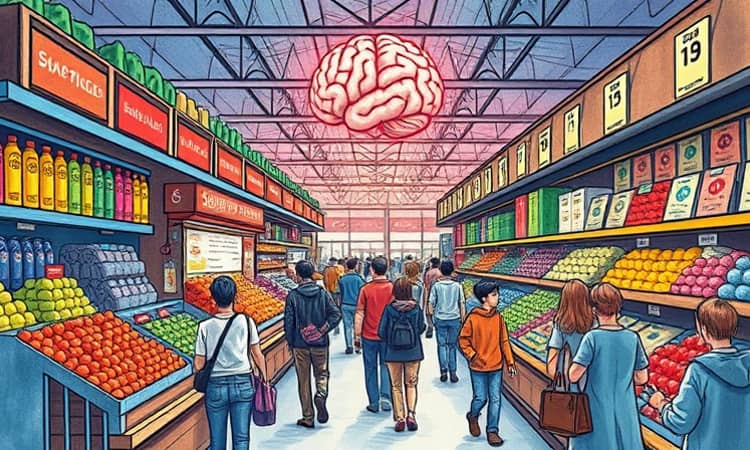
Explore how price goes beyond cost, functioning as a driver of thought and behavior. In markets worldwide, consumers and firms shape and are shaped by pricing tactics that play on psychological instincts and biases. Understanding these dynamics is vital for designing fair, effective pricing and empowering buyers to make informed decisions.
While traditional economics assumes rational actors respond only to objective numbers, human decision-making often relies on shortcuts, emotions, and context. Recognizing prices as psychological stimuli that shape perception unlocks new insights into market behavior.
Conceptual Foundations
At the core of price psychology lies a tension between two views. The rational model suggests consumers maximize utility by comparing cost and benefit. Behavioral economics, however, reveals that decisions hinge on heuristics, emotions, and presentation. The same number can feel either appealing or off-putting depending on framing, context, and personal reference points.
Prospect theory, developed by Kahneman and Tversky, shows that individuals perceive gains and losses relative to a reference level. Because losses looming larger than gains in our minds, a price rise feels more painful than an equivalent discount feels rewarding. This asymmetry opens avenues for strategic framing and messaging.
The framing effect further illustrates how language matters. Presenting a discount as “save $20” typically outperforms “pay $80,” even though both yield the same cost. Consumers focus on avoiding losses more intensely than acquiring gains, a principle that drives many promotional tactics today.
- Anchoring: the first price seen sets a mental benchmark for evaluations.
- Reference dependence: comparing current prices to past or competitor rates.
- Status quo bias: preferring existing subscriptions or plans over change.
- Fairness norms: reactions to price changes depend on perceived justification.
Psychological Pricing: Definitions and Core Mechanisms
Psychological pricing refers to intentionally setting and presenting prices to influence perception and behavior, rather than merely reflecting cost structures or target margins. It focuses on the interplay between emotional responses and logical processing in consumer decision-making.
This approach exploits well-documented biases such as anchoring, the decoy effect, and charm pricing. Empirical studies confirm that these tactics can significantly impact brand image and purchasing patterns, often triggering unplanned or impulse buys when executed with subtlety and consistency.
Key Psychological Pricing Strategies
- Charm pricing leverages the left-digit effect, placing prices just under full units (e.g., $9.99) to enhance perceived value and drive impulse purchases.
- Reference pricing establishes a mental benchmark by displaying higher original prices next to sale amounts, increasing perceived savings and purchase intention.
- Decoy options nudge consumer choices subtly by adding a less attractive third alternative, shifting preference toward the desired product.
- Framing messages exploit loss aversion tendencies by emphasizing savings (“save $20”) or daily cost breakdowns (“only $2 per day”) to heighten appeal.
- Free offers and bundled deals boost perceived value, combining products or services under one package and minimizing component-level price comparisons.
- Scarcity and urgency spur faster decision-making through countdowns, stock warnings, and limited-time offers to trigger fear of missing out.
Empirical Findings on Pricing Behavior
Quantitative research consistently shows that psychological pricing shapes consumer attitudes and actions. Surveys reveal that a large share of shoppers notice prices ending in .99, feel more inclined to buy those items, and admit to impulsive purchases triggered by subtle cues.
Experimental studies demonstrate that a well-placed anchor can increase willingness to pay by up to 20%. Time-limited promotions often double the conversion rate compared to open-ended discounts, and free bundling offers can boost average order values by 30% or more. Even in high-stakes decisions, biases remain influential under time pressure or limited information.
Implications for Firms, Consumers, and Policy
Understanding the psychology of price empowers firms to design more effective pricing models and marketing strategies. By aligning tactics with consumer biases, businesses can enhance perceived value, drive loyalty, and optimize revenue without sacrificing fairness or transparency.
- For firms: implement reference pricing and tested framing to increase uptake, but monitor fairness perceptions to maintain trust.
- For consumers: recognize common tactics—such as charm pricing and scarcity prompts—and pause to assess real value before purchasing.
- For policy makers: consider regulations on drip pricing and mandatory fee disclosure to protect consumers from unexpected costs and maintain market integrity.
Conclusion
Prices serve as more than mere financial figures; they act as triggers for judgment, emotion, and choice. By exploring the interplay between behavioral economics and practical pricing mechanisms, stakeholders can create ecosystems that balance profitability with consumer empowerment. As markets evolve, staying informed about price psychology will be crucial for ethical and effective participation in the global economy.