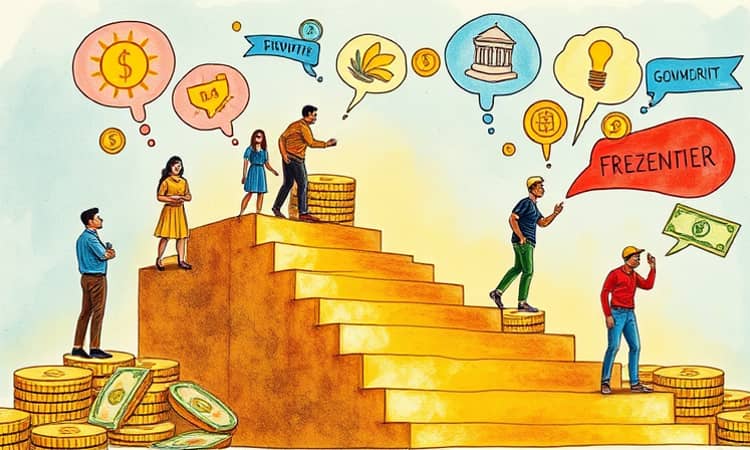
Saving money isn’t only about numbers in a bank account; it’s deeply rooted in the stories we tell ourselves. Our perceptions, beliefs, and emotional responses shape every financial decision. By exploring the psychological foundations of our relationship with money, we can build healthier habits, overcome barriers, and unlock the freedom that thoughtful saving provides.
Defining Money Mindset
At its core, a money mindset is a multi-dimensional construct of money with emotional, cognitive, and behavioral layers. Emotionally, money can evoke feelings of freedom, security, or even fear. Cognitively, it reflects beliefs about achievement, respect, and worth. Behaviorally, it translates into habits like budgeting, retention, or impulsive spending. Recognizing these components allows us to see saving not as sacrifice but as a choice aligned with our deepest values.
Childhood Origins of Attitudes
Our earliest money scripts form during childhood. Research shows that in the formative years between ages five and ten, children independently develop patterns: some become “spendthrifts,” eager to buy, while others grow into “tightwads,” inclined to save. These tendencies are fueled by their emotional responses to receiving or parting with money, rather than direct parental instruction. By identifying these ingrained scripts, adults can reshape them through conscious reflection and new experiences.
Common Money Mindsets
While individual histories differ, many people conform to one of four broad mindsets, each influencing saving behaviors in distinct ways.
Psychological Barriers to Saving
Even with the best intentions, several biases can derail our saving efforts. Recognizing them is the first step toward overcoming their influence.
- Status quo bias: A preference for maintaining existing habits keeps new savings plans at bay.
- Hyperbolic discounting and present bias: Prioritizing immediate gratification—like the latest gadget—over long-term benefits.
- FOMO (fear of missing out): 61% of Gen Z overspend on experiences, feeling compelled to join social trends.
- Financial anxiety: 60% of adults name money as a major stressor, with 59% cringing at balance checks.
Money Attitudes Dimensions
Beyond broad mindsets, money attitudes can be measured across five dimensions. Preoccupation or obsession reflects constant thoughts about wealth. The power/spending axis captures status-seeking. Retention/security measures cautious saving as a safety net. Inadequacy/anxiety signifies fear of never having enough. Finally, budget/effort reveals competence in managing funds. Understanding your dominant dimensions helps tailor strategies that resonate personally.
Strategies to Master Your Money Mindset
Transforming beliefs into action requires practical, research-backed techniques. Small, consistent changes often outperform drastic overhauls.
- Reframe saving as freedom, not sacrifice—small wins fuel positive reinforcement cycles that build momentum.
- Automate contributions—automate small contributions from income streams to turn saving into a default choice.
- Adopt a growth mindset—embrace a growth-minded financial journey by learning new budgeting and investing skills.
- Balance present and future needs—visualize long-term financial goals clearly to counter short-term temptations.
- Track emotional triggers by journaling reactions to spending urges and identifying patterns.
The Road Ahead
Mastering your money mindset is an ongoing journey, not a destination. By cultivating self-awareness, leveraging behavioral nudges, and celebrating progress, you can reshape deep-seated scripts and craft a healthier financial future. With 65% of adults 18–44 admitting they “should save more,” the opportunity to improve is immense. Each small choice—from automating a transfer to reflecting on beliefs—brings you closer to long-lasting financial well-being and freedom.
As you move forward, remember that finances intertwine with emotions, values, and identity. Whether you identify as a spender or saver, an abundance-oriented risk-taker or a cautious planner, the power to evolve resides within you. Embrace learning, lean on supportive tools and communities, and allow each success, no matter how modest, to reinforce the belief that you are the architect of your financial destiny.