The shadow economy operates in the margins of formal systems, shaping livelihoods and financial flows around the world. From untaxed street vending to illicit trafficking, these activities escape official oversight yet impact every stakeholder: workers, lenders, policymakers, and communities. Understanding the credit risks within these unconventional sectors is critical for designing solutions that protect individuals and strengthen economies.
In this article, we explore the definitions, size, drivers, and impacts of the shadow economy. We then delve into the specific credit risks confronting lenders and borrowers, and conclude with practical strategies for mitigation. By blending rigorous data with inspiring narratives, we aim to equip readers with actionable insights to foster more inclusive and resilient financial systems.
Defining the Shadow Economy
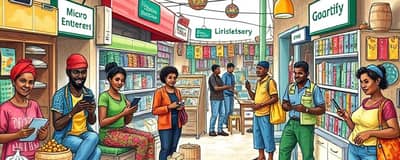
The shadow economy, also called the black market, consists of economic activities deliberately concealed from government regulation, taxation, or surveillance. It spans legal but unreported transactions—like cash-based hairdressing or side gigs via payment apps—as well as fully illegal endeavours such as drug and human trafficking.
Scholars typically divide it into three subsectors:
- Irregular subsector: Legal production hidden to evade taxes (untaxed babysitting, ride-sharing cash payments).
- Criminal subsector: Illegal trades (narcotics, weapons, bribery).
- Gray market: Genuine goods sold without authorization (luxury watches sold off-channel).
Global and Regional Size Estimates
Estimates suggest the global shadow economy accounts for approximately 11.8% of world GDP today, up from an early twenty-first-century baseline of $10 trillion and now approaching $15 trillion. While advanced economies have seen a gradual decline—from roughly 34.5% of GDP in 1991 to 27.8% in 2015—many low- and middle-income countries still rely on informal activities for more than 30% of output and employment.
In the United States, informal transactions represent about 10% of GDP (approximately $2.5 trillion), fueled by cash side gigs and cryptocurrency payments. Sub-Saharan Africa and Latin America exhibit the highest levels of informality, driven by limited social safety nets and high unemployment.
Key Drivers and Participants
Several interrelated factors push individuals and businesses into the shadow economy:
- High regulatory burden: Tax rates and red tape can incentivize under-the-table transactions.
- Corruption and weak rule of law: Bribery and impunity lower the risk of detection.
- Poverty and unemployment: Necessity drives disenfranchised groups to informal work.
- Technological enablers: Dark web platforms, mobile money, and crypto facilitate anonymous trades.
Participants often include low-income or less-educated workers, undocumented migrants, and anyone seeking flexibility or bypassing onerous regulations. In many developing economies, over half of all employment is informal, highlighting the shadow economy’s role as both lifeline and systemic challenge.
Credit Risks in Unconventional Sectors
Lenders extending credit to shadow-economy participants face unique risks that can undermine portfolio performance and financial stability:
Key challenges include the absence of reliable financial records, which obscures true repayment capacity, and the volatility associated with enforcement crackdowns or macroeconomic shocks. For example, a crackdown on unregistered street vendors can suddenly sever a borrower’s revenue stream, leading to rapid default.
Furthermore, traditional credit scoring models struggle to incorporate unconventional data sources—like digital wallet histories or peer-to-peer transaction patterns—leaving many informal participants unbanked or reliant on high-cost, informal lenders.
Practical Strategies for Mitigating Credit Risk
Despite these challenges, innovative approaches are emerging to bridge the gap between shadow-economy participants and responsible finance:
- Alternative data integration: Leverage mobile money and e-commerce transaction histories to assess creditworthiness.
- Community-based lending: Employ group guarantees and local networks to reduce default rates.
- Regulatory sandboxes: Pilot fintech solutions under relaxed rules to test digital onboarding and risk filters.
- Formalization incentives: Offer tax breaks or streamlined registration to encourage businesses to enter the formal sector.
By combining technology—such as AI-driven risk models and blockchain-based identity verification—with tailored policy measures, lenders and regulators can create a more inclusive credit environment.
Trends, Policies, and Future Outlook
Digitalization is a double-edged sword: while blockchain and AI tools can enhance transparency and detection, they also enable more sophisticated anonymity and evasion. Governments and institutions must therefore adapt in real time, employing data analytics and cross-agency collaboration to stay ahead of evolving shadow-economy practices.
Policy frameworks should focus on a balanced approach:
- Strengthening rule of law and anti-corruption efforts.
- Improving access to formal financial services for underserved populations.
- Reducing unnecessary regulatory burdens that push enterprise activities underground.
- Investing in digital infrastructure to increase transaction traceability.
By harnessing both soft incentives and robust enforcement, countries can shrink the hidden economy’s footprint, boost public revenues, and foster more resilient communities.
Conclusion
The shadow economy, though often invisible in official statistics, wields profound influence over global financial systems. Its participants—driven by necessity, opportunity, or outright criminal intent—face and create credit risks that traditional lenders and regulators struggle to manage.
Yet within these challenges lie opportunities for transformative change. By integrating alternative data, leveraging community networks, and enacting pragmatic policies, stakeholders can extend fair credit to those on the economic margins. In doing so, they not only unlock new markets but also reinforce the social contract: ensuring that financial inclusion and stability advance hand in hand.
Ultimately, illuminating the shadow economy is not just a matter of enforcement, but of empathy and innovation. Together, we can build systems that recognize every transaction’s human story—and transform hidden risks into shared prosperity.