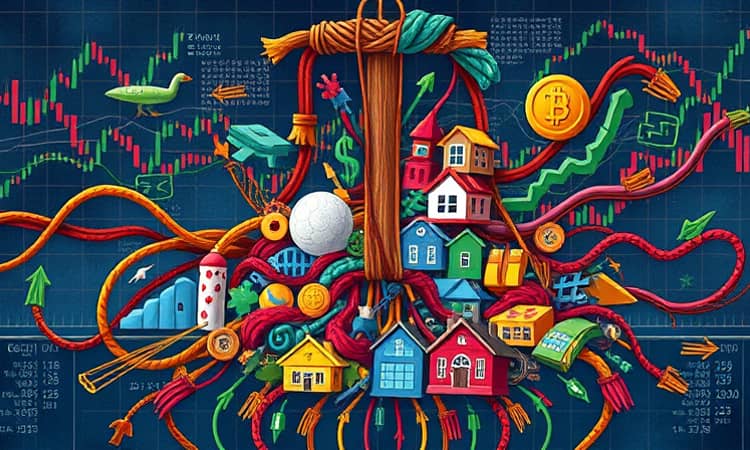
In an ever-changing financial landscape, investors can feel torn between chasing the next big win and shielding their capital from market storms. The modern solution lies in becoming a wealth weaver, deliberately intertwining multiple asset types, time horizons, and return drivers to craft a portfolio that stands resilient through both booms and busts.
By focusing on strategic allocation rather than speculative timing, a wealth weaver shapes a diversified structure designed for long-term financial security and independence. Each thread—equity, bond, real asset, alternative—serves a unique purpose, contributing to a vibrant mosaic of growth, income, and stability.
Embracing the Weaver’s Mindset
At its heart, modern portfolio theory teaches that asset allocation drives roughly 90% of a portfolio’s return variability. Security selection and market timing account for the remainder, making them secondary concerns for most investors. A true wealth weaver focuses first on the architecture of allocations, then refines details through targeted security choices.
- Asset classes woven together for balanced growth
- Strategies mixing value, growth, income, and alternatives
- Time buckets aligned with goals and liquidity needs
- Behavioral and tax frameworks integrated with objectives
Building Blocks: Asset Allocation and the Efficient Frontier
Asset allocation defines the proportions of equities, bonds, cash, real estate, commodities, and alternatives in a portfolio. Extensive research shows that these decisions determine most long-term outcomes. By plotting risk (volatility) against expected return, investors can identify an efficient frontier—a set of portfolios offering the highest return for each risk level.
Consider an inefficient portfolio yielding 10% with 25% volatility. By shifting to an efficient mix, the same volatility could deliver 12%, or risk could fall to 12% while maintaining 10%. This illustrates how risk-adjusted returns over time improve through thoughtful blending rather than speculative bets.
The Threads of Diversification
Diversification smooths the ride by combining assets that react differently to market forces. When one thread loosens, another holds firm. The power comes from diversification across uncorrelated assets, which can reduce drawdowns and protect capital during stress.
- Equities, bonds, cash, real estate, commodities, alternatives
- Within equities: large/mid/small cap; value/growth; sector tilts
- Global exposure: domestic, developed, emerging markets
- Mix of low-risk and higher-risk instruments for balance
For example, a 2007 portfolio of 40% equities, 40% bonds, and 20% commodities would have sacrificed some upside in the pre-crisis rally but cushioned losses far better than an all-equity portfolio in 2008.
Stitching Strategies and Time Horizons
True weaving extends beyond asset mix to include capital partitioning. By segmenting wealth into buckets—“today,” “lifetime,” and “legacy”—investors can adopt different risk profiles for each horizon. Short-term needs favor cash and high-quality bonds, while distant goals warrant a bolder equity tilt.
Effective portfolios begin with clearly articulated goals and constraints. Goal-based planning follows a disciplined process:
- Define personal objectives and risk tolerance
- Evaluate current assets, liabilities, and cash flows
- Forecast needs under varying market scenarios
- Establish guardrails: spending rules and risk limits
Case Studies and Canonical Allocations
Classic allocation models provide useful benchmarks. By weaving these example mixes, investors can visualize how portfolios behave under different circumstances.
A conservative investor trades some long-term growth for stability, relying on bonds and cash. The balanced archetype around 60/40 remains a stalwart for many, offering moderate growth with a cushion. An aggressive profile emphasizes equities and small allocations to alternatives for higher return potential and volatility.
Practical Steps to Weave Your Own Tapestry
Translating theory into action requires a structured approach. Follow these steps to craft a personalized, resilient portfolio:
- Define goals, time horizons, and risk capacity
- Assess your current balance sheet and cash flows
- Select a diversified mix of core asset classes
- Allocate capital by time horizon buckets
- Review and rebalance at regular intervals
Embrace a disciplined rebalancing schedule to maintain target weights and capture gains from outperforming assets. Resist the urge to abandon your weaving during market turbulence; the tapestry is designed to endure cycles of volatility.
By weaving together a thoughtfully structured portfolio, you can pursue both growth and protection, weaving a legacy of prosperity for today, tomorrow, and generations to come. Let your wealth become an artful tapestry, resilient and vibrant, reflecting your aspirations and guiding you toward enduring success.